Dynamic Real Estate & Car Listing Platform
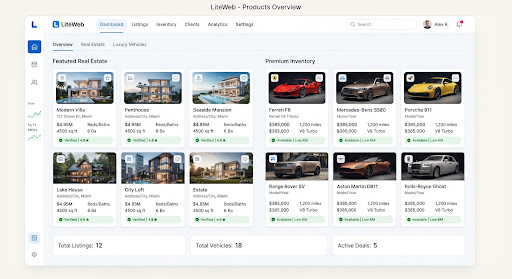
One listing engine for agencies and dealerships. Buyers search homes or vehicles on a map, save the filters that matter, and your team gets the inquiry before it goes cold.
Sound familiar?
If you sell properties or vehicles, the listing site is often the weakest part of the business:
- Inventory lives in spreadsheets, then goes stale on the website
- Buyers cannot search by map, radius, or neighborhood
- Inquiries land in WhatsApp and never reach the right agent
- One site that cannot switch between houses and cars
- Filters that ignore trim, mileage, beds, or square footage
- Hot leads go cold because nobody followed up in time
Your stock changes every day. Buyers expect a live catalog, a map, and a reply now — not a contact form that sits unread.
There is a better way.
One engine, two marketplace UIs
LiteWeb builds a listing platform around a single inventory, search, and lead model. The taxonomy switches the interface: property cards for real estate, vehicle cards for automotive. Same engine. The right fields, filters, and maps for each vertical.
You tell us how your stock is structured. We build the catalog, the search, and the routing so agents and dealers work from one system.
Real estate listing platform
Agencies and developers need more than a photo and a price. Each property has a type, a location, a set of rooms, and an agent who should see the inquiry first. The real estate UI is built for that.
What you get:
- Property types: apartment, villa, land, commercial, and new developments
- Beds, baths, square footage, floor, parking, and furnishing as first-class filters
- Map pin, neighborhood, and radius search so buyers browse by location
- Viewing requests routed to the listing agent with name, number, and preferred time
Listings stay tied to the agent or office that owns them. When stock changes, the public card updates with it.

Automotive listing platform
Dealerships sell by make, model, trim, and condition — not by neighborhood. The automotive UI uses vehicle taxonomy so buyers can filter the lot the way they shop in person.
What you get:
- Make, model, year, trim, mileage, fuel, and body style as searchable fields
- New, used, and certified stock with VIN-style inventory codes your team already uses
- Dealer lot location on the map, plus filters for price, drivetrain, and features
- Test-drive and price inquiries scored and routed to the right salesperson
When a car is sold or reserved, it leaves the public catalog. Your team is not chasing leads on vehicles that are already gone.

The shared search engine
Both verticals run on the same discovery tools: fast filters, saved searches, map clusters, and a lead desk that does not lose inquiries.
Smart Parameters
Filter by specific vehicle trim levels or real estate square footage with sub-millisecond latency.
Saved Queries
Users can save complex search filters and receive instant push notifications for new matches.
Lead Intelligence
Integrated CRM for capturing, scoring, and routing inquiries to your sales team in real-time.
Precision Map Clusters
Vector-based clustering handles thousands of points with zero lag, including radius search and POI overlays.
Maps buyers actually use
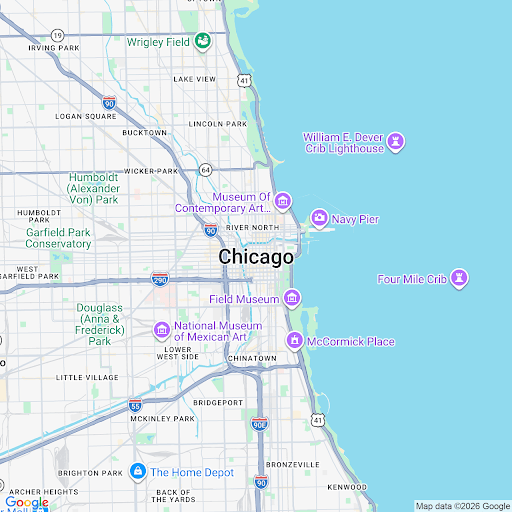
A listing page without a map is a catalog. Buyers want to draw an area, set a radius, and see what is for sale around a school, a highway, or a showroom.
What you get:
- Custom polygon drawing so buyers search a neighborhood, not a city name
- Radius search and point-of-interest overlays
- Vector clustering that stays smooth with thousands of pins
- Location APIs so traffic, commute, and nearby amenities can sit on the same map
What a listing card looks like
Sample cards from each vertical. The real platform uses your photos, prices, and specs — with the same layout buyers scan in a feed.
The Glass Pavilion — $2,450,000
4 Beds · 3 Baths · 3,200 sqft
2024 Apex GT-E — $112,000
Electric · 210 mph top speed · 0–60 in 2.1s
Who marketplace platforms are for
If you publish inventory for buyers to search, the same engine can power the catalog, the map, and the lead desk.
| Business | How it helps |
|---|---|
| Real estate agencies | Publish live stock, let buyers filter by beds and map, and route viewing requests to the listing agent |
| Developers & brokers | Show new units by building and floor plan instead of a static brochure PDF |
| Car dealerships | Put the lot online with make, model, trim, and mileage — then send test-drive leads to the right salesperson |
| Listing aggregators | One search UI across many agencies or dealers, with clustering that stays fast at volume |
| Compounds & resale boards | Host for-sale and for-rent listings on your own site instead of scattering ads on random pages |
How we build it
We start from your inventory, not a generic template. Search, maps, and leads sit on top of a model that matches how you actually sell.
Inventory model
Property or vehicle fields, photos, status, and who owns each listing. The public card is generated from that record.
Search and maps
Filters, saved queries, and map clusters tuned to the vertical — beds and neighborhoods, or make, trim, and the lot.
Lead capture
Inquiries, viewing requests, and test-drive asks go to the right person with the listing attached. Nothing sits in a shared inbox.
Ready to launch a listings marketplace?
Tell us whether you sell properties, vehicles, or both. We will show you how a custom search, map, and lead engine would work for your inventory.
Get Started